Embark on a journey towards tranquil nights and revitalizing mornings with “How to Meditate for Achieving a Peaceful Sleep.” This guide is meticulously crafted to unveil the profound connection between meditation and the attainment of superior sleep quality. We’ll explore how meditation, a practice rooted in ancient wisdom, can be a powerful tool to combat the common challenges that often hinder our ability to drift off peacefully.
This exploration will cover everything from the fundamental principles of meditation to practical techniques you can incorporate into your daily routine. We’ll delve into creating the perfect environment for meditation, mastering breathing exercises, and embracing guided meditations designed to lull you into a state of deep relaxation. Furthermore, we will examine the application of mindfulness practices, the various types of meditation best suited for sleep, and how to overcome obstacles that might arise.
Whether you are new to meditation or have some experience, this guide offers insights and strategies to enhance your sleep quality and overall well-being.
Introduction to Meditation for Sleep
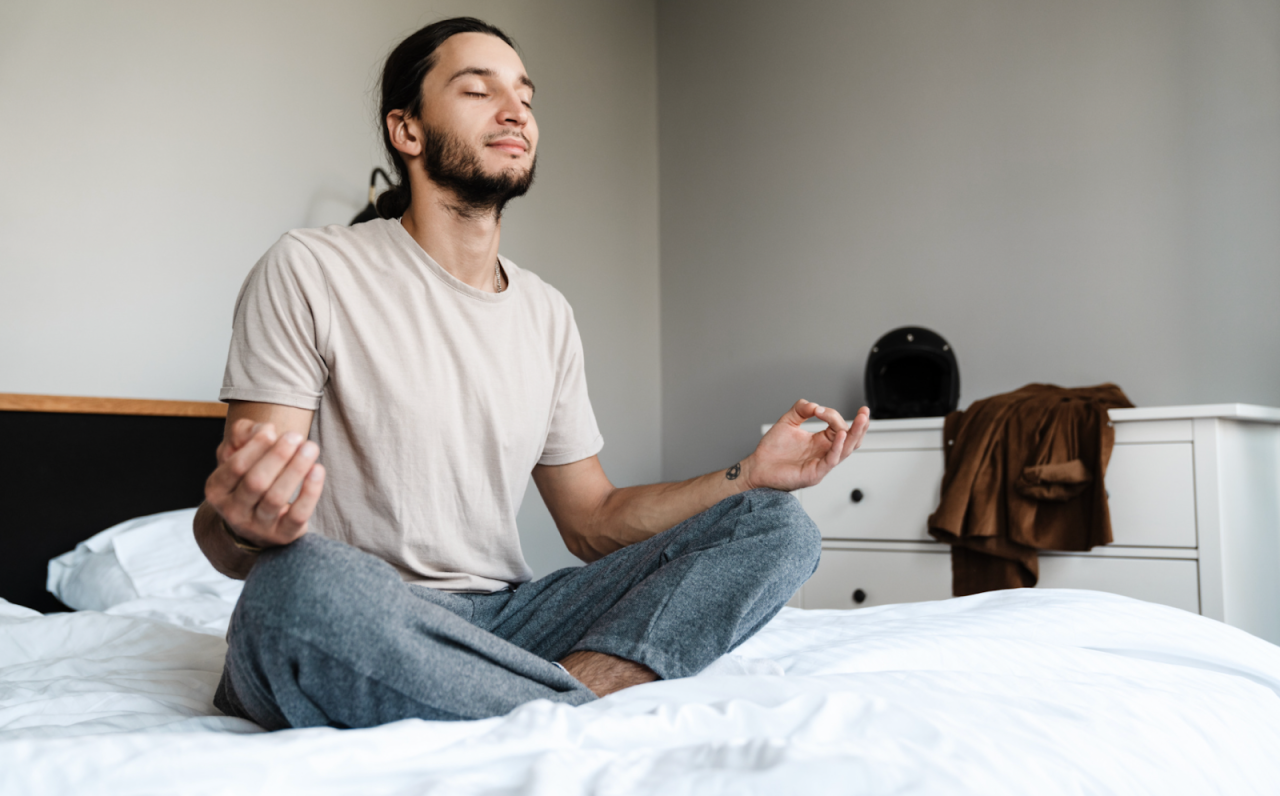
Meditation, at its core, is a practice of training your mind to focus and redirect your thoughts. It’s a technique that cultivates a state of mental clarity and emotional calmness, effectively promoting relaxation. This relaxation, in turn, forms a crucial foundation for achieving restful sleep.The link between meditation and improved sleep quality is well-established. Regular meditation practice can help reduce stress and anxiety, both of which are significant contributors to sleep disturbances.
By calming the nervous system, meditation prepares the body for sleep, making it easier to fall asleep and stay asleep throughout the night.
Common Sleep Challenges and Meditation’s Role
Many people struggle with sleep due to various factors. Meditation offers a powerful tool to address these challenges.
- Stress and Anxiety: These are perhaps the most common culprits behind sleepless nights. The racing thoughts and physical tension associated with stress can make it nearly impossible to relax and drift off. Meditation helps to quiet the mind and release physical tension, allowing the body to relax. For example, a study published in JAMA Internal Medicine found that mindfulness meditation can be as effective as medication in treating insomnia.
- Racing Thoughts: The inability to switch off the mind is a significant barrier to sleep. Meditation teaches you to observe your thoughts without judgment, allowing them to pass without getting caught up in them. This detachment from thoughts helps to reduce mental clutter and promote a sense of calm.
- Physical Discomfort: Pain or physical discomfort can disrupt sleep. Meditation can help manage pain by reducing its perceived intensity and promoting relaxation. This can be achieved through techniques such as body scan meditation, which focuses on bringing awareness to different parts of the body.
- Poor Sleep Habits: Irregular sleep schedules and unhealthy habits can also interfere with sleep. While meditation alone won’t fix these, it can complement other healthy sleep practices. Practicing meditation before bed can signal to your body that it’s time to sleep, contributing to a more regular sleep cycle.
Regular meditation practice, even for short periods each day, can lead to significant improvements in sleep quality.
Preparing Your Environment for Meditation
Creating the right environment is crucial for a successful meditation practice, especially when aiming for peaceful sleep. A well-prepared space minimizes distractions and fosters a sense of calm, allowing you to easily transition into a meditative state. This section explores the key elements of an ideal meditation environment.
Ideal Physical Environment
The physical environment significantly impacts your ability to relax and focus. Paying attention to lighting, temperature, and noise level can dramatically improve your meditation experience.
- Lighting: Aim for soft, diffused lighting. Harsh or bright lights can be stimulating and prevent relaxation. Consider using dimmable lights, candles (used safely, of course), or natural light filtered through curtains. The goal is to create a gentle ambiance that promotes a sense of tranquility.
- Temperature: Maintain a comfortable temperature. Being too hot or too cold can be distracting. A slightly cooler temperature than what you might normally prefer can be conducive to relaxation. The ideal temperature varies from person to person, so experiment to find what works best for you.
- Noise Level: Minimize distracting noises. Choose a quiet location, or use earplugs or noise-canceling headphones if complete silence is not possible. White noise machines or nature sounds can also be effective in masking disruptive sounds and promoting relaxation.
Comfortable Meditation Positions
Finding a comfortable position is essential for extended meditation sessions. Experiment with different positions to discover what best suits your body and needs. Remember that the primary goal is to maintain a relaxed posture that allows for deep breathing.
- Sitting Positions:
- Cross-legged (Sukhasana or Easy Pose): This is a common and accessible pose. It involves sitting with the legs crossed, the spine straight, and the hands resting comfortably on the knees or in the lap. Pros: Relatively easy to maintain for most people, promotes a sense of grounding. Cons: Can be uncomfortable for those with knee or hip issues.
- Half Lotus (Ardha Padmasana): One foot rests on the opposite thigh. Pros: Slightly more stable than cross-legged. Cons: Can be challenging for those with limited hip flexibility.
- Full Lotus (Padmasana): Both feet rest on the opposite thighs. Pros: Very stable and promotes good posture. Cons: Requires significant flexibility and can be difficult for many. Not recommended for beginners.
- Seated on a Chair: Sit upright in a chair with your feet flat on the floor and your back straight but not stiff. Pros: Accessible for everyone, especially those with mobility issues. Cons: Can be more challenging to maintain a straight spine and prevent slouching.
- Lying Down (Savasana or Corpse Pose): Lie flat on your back with your arms at your sides, palms facing up. Pros: Extremely relaxing and comfortable. Cons: Can lead to sleepiness for some, making it less ideal for active meditation.
Creating a Relaxing Atmosphere
Enhancing your environment with sensory elements can deepen relaxation. Consider incorporating aromatherapy and calming sounds to create a more conducive atmosphere for meditation.
- Aromatherapy: Certain scents are known for their calming properties. Using essential oils can help to reduce stress and anxiety, promoting relaxation.
- Lavender: Known for its soothing and sleep-inducing qualities. Studies have shown that inhaling lavender can decrease heart rate and blood pressure.
- Chamomile: Traditionally used to promote relaxation and reduce insomnia.
- Sandalwood: Has grounding and centering effects.
- Frankincense: Can help to calm the mind and improve focus.
Use a diffuser to disperse essential oils into the air, or apply a diluted oil blend topically. Always follow safety guidelines and consult with a healthcare professional if you have any allergies or sensitivities.
- Calming Sounds: Sound can significantly impact your state of mind. Choosing the right sounds can help you relax and focus.
- Nature Sounds: Sounds of rain, ocean waves, or forests can create a peaceful ambiance.
- Ambient Music: Instrumental music with a slow tempo and calming melodies.
- Singing Bowls or Chimes: The resonant tones of singing bowls and chimes can promote relaxation and focus.
- White Noise: Masks distracting sounds and creates a consistent background sound.
Experiment with different sound options to find what resonates with you.
Comparison of Meditation Environments
Different environments offer unique advantages and disadvantages for meditation. The suitability of each environment depends on individual preferences and available resources. The table below provides a comparison.
| Environment | Description | Suitability | Considerations |
|---|---|---|---|
| Bedroom | A private space designed for rest. | Highly suitable, especially for sleep-focused meditation. | Ensure a dark, quiet, and comfortable environment. Minimize distractions like electronic devices. |
| Outdoors (e.g., garden, park) | Natural settings offering fresh air and exposure to nature. | Suitable for those who enjoy being outdoors and are not easily distracted by external stimuli. | Consider weather conditions, noise levels, and potential distractions like insects or other people. |
| Meditation Room/Dedicated Space | A room or area specifically designated for meditation. | Ideal for creating a consistent and personalized meditation practice. | Requires dedicated space and the ability to maintain the environment consistently. |
Breathing Techniques for Sleep
Mastering your breath is a cornerstone of effective meditation for sleep. It acts as an anchor, pulling you away from the racing thoughts that often keep you awake. By consciously regulating your breathing, you can signal your nervous system to shift from a state of alertness to one of relaxation, making it easier to drift off to sleep. The following techniques offer practical methods for achieving this calming effect.
Importance of Breath Control in Meditation
Breath control is vital in meditation because it directly influences the autonomic nervous system, which governs involuntary bodily functions like heart rate and digestion. Focusing on the breath allows you to consciously regulate this system, promoting relaxation and reducing stress. When you slow and deepen your breath, you trigger the parasympathetic nervous system – the “rest and digest” response – which counteracts the “fight or flight” response activated by stress and anxiety.
This physiological shift creates an environment conducive to sleep. Regular practice of breath control techniques also cultivates mindfulness, making you more aware of your thoughts and feelings without judgment, further aiding in the quieting of the mind.
The “4-7-8” Breathing Technique
The 4-7-8 breathing technique, developed by Dr. Andrew Weil, is a powerful method for promoting relaxation and sleep. It’s simple to learn and can be practiced anywhere. The technique involves inhaling for a count of four, holding your breath for a count of seven, and exhaling for a count of eight.Here’s a step-by-step guide:
- Preparation: Sit comfortably with your back straight. You can place the tip of your tongue behind your upper front teeth.
- Inhale (Count of 4): Breathe in slowly and deeply through your nose, counting to four. Imagine filling your lungs completely.
- Hold (Count of 7): Hold your breath for a count of seven.
- Exhale (Count of 8): Exhale slowly and completely through your mouth, making a whooshing sound, for a count of eight.
- Repeat: Repeat the cycle four times.
This technique helps to slow the heart rate and lower blood pressure, creating a sense of calm that can help you fall asleep. It can be practiced at any time, but is especially effective when done just before bed.
The 4-7-8 technique is a natural tranquilizer for the nervous system. Unlike prescription drugs, which can have side effects, this exercise is free and safe. – Dr. Andrew Weil.
Other Effective Breathing Exercises for Relaxation
Beyond the 4-7-8 technique, several other breathing exercises can promote relaxation and improve sleep quality. These techniques all share the common goal of slowing the breath and promoting a sense of calm.
- Diaphragmatic Breathing (Belly Breathing): This technique focuses on deep abdominal breathing. Place one hand on your chest and the other on your belly. Inhale deeply through your nose, allowing your belly to rise while keeping your chest relatively still. Exhale slowly through your mouth, letting your belly fall. This encourages the use of the diaphragm, the primary muscle of respiration, leading to a deeper and more relaxing breath.
This is particularly helpful for reducing anxiety and stress.
- Alternate Nostril Breathing (Nadi Shodhana): This technique involves alternating between breathing through each nostril. Close one nostril with your finger and inhale through the other. Then, close the inhaling nostril and exhale through the other nostril. This is believed to balance the energy channels in the body, promoting relaxation and mental clarity.
- Box Breathing (Square Breathing): This technique involves inhaling for a count of four, holding for a count of four, exhaling for a count of four, and holding the breath out for a count of four. This creates a “box” or “square” pattern with the breath, promoting a sense of rhythm and focus.
These exercises can be adapted to suit your personal preferences and needs. Experiment with each to find which one works best for you.
Common Breathing Mistakes and How to Avoid Them
While breathing exercises are simple, there are common mistakes that can hinder their effectiveness. Being aware of these pitfalls allows you to adjust your practice and maximize its benefits.
- Breathing Too Shallowly: Avoid shallow breaths, which primarily engage the chest muscles and can lead to tension.
- Solution: Focus on deep, abdominal breaths, allowing your belly to rise and fall with each inhale and exhale.
- Forcing the Breath: Avoid forcing the breath, which can create tension and anxiety.
- Solution: Breathe naturally and comfortably, without straining.
- Holding Your Breath Too Long: Holding your breath for excessively long periods can be uncomfortable and counterproductive.
- Solution: Adjust the counts in techniques like 4-7-8 to suit your comfort level. If the hold feels difficult, shorten it.
- Rushing the Exercise: Rushing through the breathing exercises can negate their calming effect.
- Solution: Take your time and focus on the present moment, allowing the breath to guide you.
- Focusing on the Outcome: Focusing too much on falling asleep can create anxiety.
- Solution: Instead, concentrate on the sensation of the breath and the present moment. Let sleep come naturally.
Guided Meditation for Sleep
Guided meditation is a powerful tool for inducing relaxation and improving sleep quality. It involves a narrator guiding you through a series of visualizations, breathing exercises, and affirmations designed to calm the mind and body. This practice can be particularly effective in quieting the mental chatter that often prevents restful sleep.
Definition and Benefits of Guided Meditation
Guided meditation provides a structured approach to meditation, making it accessible even for beginners. It offers a pathway to relaxation by directing the listener’s focus away from stressful thoughts and towards a state of calm. The benefits are numerous, extending beyond improved sleep to include reduced anxiety, enhanced self-awareness, and increased emotional regulation.
Common Themes in Guided Meditations
Guided meditations frequently employ specific themes to facilitate relaxation and sleep. These themes provide a framework for the listener’s experience, allowing them to focus on particular aspects of their body or mind.
- Body Scan: This technique involves systematically bringing awareness to different parts of the body, noticing any sensations without judgment. This can help release physical tension and promote a sense of groundedness.
- Visualization: Guided visualization encourages the listener to create mental images of peaceful scenes or objects. This can help to distract from racing thoughts and cultivate a sense of tranquility. Examples include visualizing a serene beach, a calm forest, or a cozy fireplace.
- Breathing Exercises: Many guided meditations incorporate breathing techniques, such as deep abdominal breathing or the 4-7-8 method. These exercises help to regulate the nervous system, slowing the heart rate and promoting relaxation.
- Affirmations: Positive affirmations are often used to reprogram negative thought patterns and promote a sense of self-compassion. These affirmations can focus on feelings of peace, safety, and well-being.
Script for a Short Guided Meditation (Relaxation and Sleep)
This script is designed to be approximately 5-7 minutes long, focusing on gentle relaxation and preparation for sleep.
Narrator: Welcome. Find a comfortable position, either lying down or sitting. Allow your body to settle. Gently close your eyes, or if you prefer, soften your gaze downwards.
Narrator: Take a deep breath in, filling your lungs completely. And slowly exhale, releasing any tension you may be holding. Let your body become heavy. Feel the support beneath you.
Narrator: With each breath, feel your body softening further. Imagine a warm, golden light gently flowing over you, dissolving any stress or worry. This light embraces you, bringing a sense of peace.
Narrator: Now, bring your awareness to your toes. Notice any sensations. Wiggle them gently, and then allow them to relax completely. Feel the relaxation spreading through your feet, your ankles, your calves. Allow your legs to become heavy and at ease.
Narrator: Moving upwards, bring your attention to your belly. Notice the gentle rise and fall with each breath. Allow your belly to soften, releasing any tension. Feel a sense of calm washing over you.
Narrator: Now, bring your awareness to your chest. Feel the gentle expansion and contraction with each breath. Allow your shoulders to relax, dropping away from your ears. Let your arms and hands become heavy and still.
Narrator: Moving to your face, soften your jaw. Release any tension in your forehead, your eyes, your cheeks. Let your face be smooth and relaxed.
Narrator: Take a few more deep breaths, allowing the warm, golden light to continue to envelop you. Feel safe, feel secure, feel at peace. You are safe and protected. You are ready to sleep.
Narrator: As you drift off to sleep, remember this feeling of peace and relaxation. Sleep well.
The Role of the Narrator’s Voice
The narrator’s voice is crucial in guiding a successful meditation. The pace, tone, and emphasis used by the narrator directly influence the listener’s experience and ability to relax.
- Pace: The pace should be slow and deliberate, allowing ample time for the listener to follow instructions and absorb the experience. Pauses between phrases are essential, providing space for the listener to connect with the sensations and visualizations.
- Tone: The tone should be calm, soothing, and reassuring. A gentle, empathetic tone helps the listener feel safe and supported. The narrator should avoid sounding rushed or stressed, as this can inadvertently transmit tension to the listener.
- Emphasis: Emphasis is used to highlight key words and phrases, drawing the listener’s attention to the most important aspects of the meditation. This can involve slightly raising the pitch of the voice, slowing down the delivery, or using a slightly stronger inflection on specific words or phrases. For example, in the phrase “Allow your body to relax completely,” the narrator might emphasize the words “relax completely” to reinforce the intention.
Mindfulness Practices for Bedtime
Incorporating mindfulness into your bedtime routine can significantly enhance your sleep quality. Mindfulness encourages a state of present-moment awareness, allowing you to observe your thoughts and feelings without judgment. This practice helps to quiet the mind and body, making it easier to drift off to sleep. By cultivating mindfulness, you can learn to manage the mental chatter and physical tension that often interfere with restful sleep.
Understanding Mindfulness and Its Application Before Sleep
Mindfulness is the practice of paying attention to the present moment without judgment. It involves focusing on your experiences – thoughts, feelings, bodily sensations, and the surrounding environment – as they arise. Applying mindfulness before sleep involves bringing this non-judgmental awareness to the experience of preparing for and entering sleep. This means observing your thoughts and physical sensations without getting carried away by them.
Instead of engaging in mental battles or planning for the next day, you simply acknowledge what is happening in the present moment. This approach can help to reduce stress, anxiety, and racing thoughts, all of which can hinder sleep.
Techniques for Practicing Mindfulness While Lying in Bed
There are several techniques to practice mindfulness while lying in bed. These techniques involve directing your attention to different aspects of your experience.
- Body Scan Meditation: This involves systematically bringing awareness to different parts of your body, noticing any sensations without judgment. Starting with your toes and moving upwards, you observe any sensations of warmth, coolness, tingling, or pressure. This practice helps to release physical tension.
- Focusing on the Breath: Similar to breathing exercises, this technique involves simply paying attention to your breath. Notice the sensation of the air entering and leaving your body. When your mind wanders, gently redirect your attention back to your breath.
- Mindful Listening: Pay attention to the sounds around you, both inside and outside your room. Notice the qualities of the sounds—their pitch, volume, and duration—without labeling or judging them. This helps to ground you in the present moment.
- Noticing Thoughts and Emotions: Acknowledge any thoughts or feelings that arise without getting caught up in them. Simply observe them as passing events, like clouds moving across the sky. This detachment can prevent you from getting overwhelmed by worries or anxieties.
Addressing Common Thoughts and Feelings That Can Disrupt Sleep
Many thoughts and feelings can disrupt sleep. Common examples include worries about the future, regrets about the past, and anxieties about daily tasks. Mindfulness provides a way to address these disruptions. Instead of trying to suppress or fight these thoughts, you observe them without judgment. Recognize that these thoughts are simply mental events and do not define you or your reality.
Acknowledging and accepting these thoughts allows them to pass without causing undue stress. For example, if you find yourself worrying about a work project, you might acknowledge the thought, remind yourself that you are safe in bed, and gently redirect your attention to your breath or body sensations. This approach prevents the thought from spiraling into a full-blown anxiety attack, allowing you to relax and fall asleep.
Studies have shown that consistent mindfulness practice can lead to a reduction in rumination and worry, thereby improving sleep quality.
Sample Mindfulness Exercise: Body Awareness
Lie comfortably in bed, with your eyes closed or gently lowered.
Take a few deep breaths to relax your body.
Bring your attention to your toes. Notice any sensations: warmth, coolness, tingling, or pressure. Don’t judge the sensations; simply observe them.
Gradually move your attention up your body: feet, ankles, shins, knees, thighs, hips, abdomen, chest, back, shoulders, arms, hands, neck, face, and head.
As you notice each part of your body, acknowledge any sensations present. If your mind wanders, gently bring your attention back to your body.
Continue this body scan for 5-10 minutes, allowing yourself to fully relax into the present moment.
Types of Meditation for Sleep

Various meditation techniques can effectively promote relaxation and improve sleep quality. Understanding these different approaches and their specific benefits allows you to choose the most suitable practice for your individual needs and preferences. By incorporating these techniques into your bedtime routine, you can cultivate a deeper sense of calm and significantly enhance your ability to fall asleep and stay asleep.
Loving-Kindness Meditation for Sleep
Loving-kindness meditation, also known as Metta meditation, cultivates feelings of compassion, kindness, and acceptance towards oneself and others. Practicing this type of meditation before bed can help dissolve feelings of stress, anxiety, and self-criticism, creating a peaceful mental state conducive to sleep.The process involves directing well-wishes towards oneself, loved ones, neutral individuals, difficult people, and eventually, all beings. Here’s a detailed breakdown:* Step 1: Focus on Yourself. Begin by bringing to mind your own image and silently repeating phrases like, “May I be happy.
May I be healthy. May I be safe. May I live with ease.” Focus on the feelings associated with these phrases, allowing them to permeate your being. Imagine yourself surrounded by a warm, gentle light.* Step 2: Extend to a Loved One. Visualize a person you deeply care about. Direct the same well-wishes towards them: “May you be happy.
May you be healthy. May you be safe. May you live with ease.” Feel the warmth and affection you have for this person, and allow it to expand.* Step 3: Include a Neutral Person. Think of someone you don’t know well, perhaps a cashier or a neighbor. Silently offer them the same blessings: “May you be happy. May you be healthy.
May you be safe. May you live with ease.” This step helps to broaden your circle of compassion.* Step 4: Consider a Difficult Person. This is the most challenging, but also the most rewarding step. Bring to mind someone with whom you have a difficult relationship. Send them the same well-wishes, even if you find it difficult. This doesn’t mean you condone their actions, but rather that you wish them well-being: “May you be happy.
May you be healthy. May you be safe. May you live with ease.” This step can help dissolve resentment and foster a sense of inner peace.* Step 5: Extend to All Beings. Finally, expand your loving-kindness to include all beings, encompassing yourself, your loved ones, neutral individuals, difficult people, and everyone else in the world. Repeat the phrases, allowing the feeling of compassion to spread throughout your mind and body.
The core of loving-kindness meditation is the cultivation of specific emotions. These include:
Warmth
A feeling of gentle affection and care.
Compassion
Understanding and empathy for the suffering of others.
Joy
Sharing in the happiness of others.
Equanimity
Remaining balanced and accepting of all experiences. By regularly practicing loving-kindness meditation before bed, you can significantly reduce stress and improve sleep quality.
Overcoming Common Obstacles

Meditation for sleep can be incredibly beneficial, but it’s not always a smooth journey. Many people encounter hurdles that can make it challenging to establish and maintain a consistent practice. Understanding these obstacles and having strategies to overcome them is crucial for success. This section addresses some of the most frequent challenges and offers practical solutions.
Racing Thoughts and a Busy Mind
One of the most prevalent obstacles is the incessant chatter of the mind. Thoughts, worries, and anxieties can flood the consciousness, making it difficult to focus on the present moment and relax into sleep. This mental activity can be frustrating, especially when the goal is to quiet the mind.Here are some strategies for managing a busy mind during meditation:
- Acceptance: Acknowledge that thoughts will arise. Instead of fighting them, observe them without judgment. Imagine your thoughts as clouds passing in the sky; let them drift by.
- Focus on the Breath: Gently redirect your attention to your breath. Notice the sensation of the air entering and leaving your body. If your mind wanders, gently bring your focus back to your breath.
- Use a Mantra: A mantra is a word or phrase repeated silently. It can act as an anchor to help you stay focused. Choose a calming mantra, such as “peace,” “relax,” or “let go.”
- Body Scan Meditation: Direct your attention to different parts of your body, noticing any sensations. This helps ground you in the present moment and shifts your focus away from mental chatter.
- Visualization: Create a mental image of a peaceful scene, such as a calm beach or a serene forest. Immerse yourself in this visualization, engaging your senses.
- Progressive Muscle Relaxation: Systematically tense and release different muscle groups in your body. This can help reduce physical tension and quiet the mind.
Physical Discomfort During Meditation
Physical discomfort can significantly impede the ability to meditate effectively. Pain, stiffness, or an uncomfortable position can distract from the practice and make it difficult to relax.Solutions for dealing with physical discomfort during meditation include:
- Choose a Comfortable Position: Experiment with different positions to find one that suits you. You can sit on a cushion, in a chair, or lie down. The key is to maintain a posture that allows you to relax without falling asleep.
- Use Props: Use pillows, blankets, or cushions to support your body and alleviate pressure points. For example, placing a pillow under your knees can reduce strain on your lower back.
- Adjust Your Position: If you experience discomfort, gently adjust your position. There’s no need to endure pain.
- Move Before Meditating: Gentle stretching or a short walk before meditating can help release tension and improve flexibility.
- Be Mindful of Your Body: Pay attention to your body’s signals. If you feel pain, acknowledge it without judgment and adjust your position or take a break.
- Shorten Meditation Sessions: If physical discomfort is a persistent issue, start with shorter meditation sessions and gradually increase the duration as your body adapts.
Maintaining Consistency in Your Meditation Practice
Establishing a regular meditation practice is key to reaping its benefits. However, life’s demands and distractions can make it challenging to stay consistent.Here is advice on how to stay consistent with a meditation practice:
- Schedule Your Meditation: Treat meditation as an important appointment. Schedule it into your daily routine, just like any other essential activity.
- Start Small: Begin with short meditation sessions, such as 5-10 minutes. Gradually increase the duration as you become more comfortable.
- Choose a Consistent Time: Meditate at the same time each day to establish a routine. Morning or evening are popular choices.
- Find a Quiet Space: Create a dedicated meditation space where you can practice without distractions.
- Use Reminders: Set reminders on your phone or use a meditation app to prompt you to meditate.
- Be Patient: Don’t get discouraged if you miss a session or struggle to focus. Consistency is more important than perfection.
- Track Your Progress: Keep a meditation journal to track your sessions and note any challenges or successes. This can help you stay motivated.
- Join a Meditation Group: Connecting with others who meditate can provide support and encouragement.
- Make it Enjoyable: Experiment with different meditation techniques to find what resonates with you.
- Don’t Give Up: Even on days when you feel restless or distracted, try to meditate for a few minutes. Consistency, even in small doses, is key.
Integrating Meditation into Your Bedtime Routine
![How to Meditate to Sleep [PROVEN TECHNIQUES] - Brahmas Natural Incense](https://teknopoint.web.id/wp-content/uploads/2025/10/peaceful-sleep.jpg "How to Meditate to Sleep [PROVEN TECHNIQUES] - Brahmas Natural Incense")
Incorporating meditation into your bedtime routine is a powerful way to signal to your body and mind that it’s time to wind down and prepare for sleep. Consistent practice can significantly improve sleep quality, reduce stress, and foster a sense of calm. This section provides a practical guide to seamlessly integrating meditation into your pre-sleep rituals.
Incorporating Meditation into a Pre-Sleep Routine
Creating a consistent pre-sleep routine is essential for promoting restful sleep. This routine acts as a cue, signaling to your body that it’s time to relax and prepare for sleep. Meditation should be a key component of this routine.Here’s how to effectively incorporate meditation:
- Timing is Key: Aim to meditate approximately 30 minutes to an hour before your planned bedtime. This allows sufficient time for your body to transition into a state of relaxation.
- Consistency is Crucial: Try to meditate at the same time each night, even on weekends. This regularity helps regulate your body’s natural sleep-wake cycle, also known as your circadian rhythm.
- Create a Dedicated Space: Designate a quiet and comfortable space in your bedroom where you can meditate undisturbed. This could be a specific corner, a comfortable chair, or even your bed.
- Prepare Your Environment: Dim the lights, turn off electronic devices, and ensure the room is at a comfortable temperature. Consider using calming scents like lavender or chamomile.
- Choose Your Meditation Technique: Select a meditation technique that suits your preferences and needs. Guided meditations, body scan meditations, or simply focusing on your breath are all excellent choices.
- Start Small: Begin with short meditation sessions, such as 5-10 minutes, and gradually increase the duration as you become more comfortable.
- Be Patient: It may take time to see significant improvements in your sleep quality. Consistency and patience are key to experiencing the benefits of bedtime meditation.
Optimal Time to Meditate Before Bed
The optimal time to meditate before bed is crucial for maximizing its sleep-promoting effects. Meditating too close to bedtime might make it harder to fall asleep, while meditating too early might diminish the benefits.
- Ideal Timing: The ideal time to meditate is typically 30 to 60 minutes before you plan to go to sleep. This allows sufficient time for your body to wind down after the meditation session.
- Individual Variation: The best time may vary from person to person. Experiment to find what works best for you. Some people may find that meditating an hour before bed is more effective, while others may prefer 30 minutes.
- Consider Your Schedule: Factor in your daily schedule when determining the best time to meditate. If you have a busy evening, you might need to adjust the timing to fit your routine.
- Listen to Your Body: Pay attention to how your body feels after meditating at different times. If you feel more relaxed and sleepy after a particular time, that’s likely the optimal time for you.
- Avoid Close Proximity to Screen Time: Avoid using electronic devices, such as phones and tablets, immediately before or after meditation. The blue light emitted from these devices can interfere with sleep.
Complementary Practices to Enhance Sleep
In addition to meditation, several other practices can significantly enhance your sleep quality. Integrating these complementary practices into your bedtime routine can create a powerful synergy for better sleep.
- Journaling: Writing down your thoughts and feelings before bed can help clear your mind and reduce mental clutter. This can be particularly helpful if you tend to overthink or worry at night.
- Gentle Stretching: Performing gentle stretches can help release tension in your muscles and promote relaxation. Avoid strenuous exercise close to bedtime, as it can be stimulating.
- Reading: Reading a physical book (not on an electronic device) can be a relaxing activity that helps you unwind. Choose a calming genre, such as fiction or poetry.
- Warm Bath or Shower: Taking a warm bath or shower before bed can help regulate your body temperature and promote relaxation. The drop in body temperature after exiting the bath can signal to your body that it’s time to sleep.
- Herbal Teas: Drinking caffeine-free herbal teas, such as chamomile or valerian root tea, can promote relaxation and sleepiness.
- Avoiding Caffeine and Alcohol: Refrain from consuming caffeine and alcohol close to bedtime, as they can disrupt sleep.
- Creating a Relaxing Environment: Ensure your bedroom is dark, quiet, and cool. Consider using blackout curtains, earplugs, or a white noise machine.
Checklist for a Relaxing Bedtime Routine
Creating a checklist can help you establish a consistent and effective bedtime routine. This checklist serves as a guide to ensure you incorporate all the essential elements for a peaceful night’s sleep.Here’s a sample checklist you can adapt to your needs:
- [60-90 Minutes Before Bed] Dim the lights and turn off electronic devices.
- [60 Minutes Before Bed] Prepare your meditation space (e.g., dim lighting, comfortable temperature).
- [60 Minutes Before Bed] Drink a cup of caffeine-free herbal tea.
- [30-60 Minutes Before Bed] Engage in a 5-10 minute meditation session.
- [30-60 Minutes Before Bed] Journaling (optional).
- [30 Minutes Before Bed] Gentle stretching or light reading (optional).
- [15-30 Minutes Before Bed] Prepare your bed (e.g., ensure pillows and blankets are comfortable).
- [Bedtime] Go to bed at a consistent time.
This checklist is a guideline, and you can customize it based on your personal preferences and needs. The key is to be consistent and make these practices a regular part of your pre-sleep routine.
Addressing Sleep Disorders with Meditation
Meditation, as we’ve explored, offers a powerful set of tools for cultivating a peaceful sleep. However, it’s crucial to understand its role within the broader context of sleep health, especially when addressing established sleep disorders. While meditation can be a valuable component of a comprehensive approach, it’s not a panacea. This section delves into the application of meditation for sleep disorders, its limitations, and the importance of seeking professional guidance.
Meditation’s Impact on Insomnia and Sleep Disturbances
Meditation can positively influence insomnia and other sleep disturbances through several mechanisms. Regular practice can help regulate the body’s natural sleep-wake cycle. By reducing stress and anxiety, which are common contributors to sleep problems, meditation creates a more conducive environment for sleep. It also promotes relaxation, making it easier to fall asleep and stay asleep.
- Reducing Stress and Anxiety: Meditation techniques, such as deep breathing and mindfulness, directly combat the physiological and psychological components of stress. This can lower cortisol levels, the primary stress hormone, making it easier for the body to transition into a state of rest.
- Improving Sleep Quality: Studies have shown that consistent meditation practice can lead to improvements in sleep quality. This includes increased sleep duration, fewer nighttime awakenings, and a feeling of being more rested upon waking. For example, a study published in the
-Journal of the American Medical Association* showed that mindfulness meditation improved sleep quality in older adults with moderate sleep disturbances. - Promoting Relaxation: Meditation cultivates a state of deep relaxation. This can help quiet the mind, release muscle tension, and prepare the body for sleep. Techniques like body scan meditation can be particularly effective in this regard.
- Managing Chronic Pain: Chronic pain is a significant disruptor of sleep. Meditation, particularly mindfulness meditation, can help manage pain perception and reduce its impact on sleep. This is achieved by changing the way the brain processes pain signals.
Limitations of Meditation as a Sole Treatment
While meditation can be highly beneficial, it’s essential to acknowledge its limitations. It is not a guaranteed cure for all sleep disorders. In cases of severe insomnia, sleep apnea, restless legs syndrome, or other underlying medical conditions, meditation alone may not be sufficient. These conditions often require specific medical interventions.
- Severity of the Sleep Disorder: The effectiveness of meditation can vary depending on the severity of the sleep disorder. For mild to moderate sleep disturbances, it may be highly effective. However, for severe cases, it might only provide partial relief.
- Underlying Medical Conditions: If a sleep disorder is caused by an underlying medical condition, such as sleep apnea or restless legs syndrome, addressing the underlying condition is paramount. Meditation can be a supportive tool but not a replacement for appropriate medical treatment.
- Individual Variability: The benefits of meditation can vary from person to person. Some individuals may experience significant improvements, while others may find the effects more subtle. Factors such as consistency of practice, personal preferences, and the nature of the sleep disorder can all play a role.
When to Seek Professional Help for Sleep Problems
Recognizing when to seek professional help is critical for effective sleep management. If sleep problems persist despite consistent meditation practice or other self-help strategies, or if they significantly impact daily life, it’s time to consult a healthcare professional.
- Persistent Insomnia: If you experience difficulty falling asleep, staying asleep, or waking up too early for more than three months, despite making efforts to improve your sleep hygiene, it’s considered chronic insomnia and requires professional evaluation.
- Daytime Sleepiness: Excessive daytime sleepiness, even after getting what seems like adequate sleep, can be a sign of an underlying sleep disorder, such as sleep apnea or narcolepsy.
- Snoring and Gasping: Loud snoring, especially if accompanied by gasping or pauses in breathing during sleep, could indicate sleep apnea, a serious condition.
- Other Symptoms: Other concerning symptoms include restless legs syndrome, frequent nightmares, sleepwalking, or any other unusual sleep behaviors.
- Impact on Daily Functioning: If sleep problems are interfering with your ability to function effectively at work, school, or in your personal relationships, seeking professional help is essential.
Meditation in Conjunction with Other Sleep Therapies
The most effective approach to managing sleep disorders often involves a combination of therapies. Meditation can be a powerful adjunct to other treatments, enhancing their effectiveness and improving overall outcomes.
- Cognitive Behavioral Therapy for Insomnia (CBT-I): CBT-I is a highly effective treatment for insomnia. It involves cognitive restructuring (changing negative thoughts about sleep) and behavioral techniques (such as sleep restriction and stimulus control). Meditation can complement CBT-I by enhancing relaxation and reducing anxiety, thereby accelerating the benefits of CBT-I.
- Medication: In some cases, medication may be necessary to manage sleep disorders. Meditation can be used alongside medication to reduce the need for higher doses or to minimize side effects. However, any medication should be prescribed and monitored by a healthcare professional.
- Lifestyle Changes: Implementing healthy sleep habits, such as maintaining a regular sleep schedule, creating a relaxing bedtime routine, and avoiding caffeine and alcohol before bed, is crucial. Meditation can enhance the effectiveness of these lifestyle changes by promoting relaxation and reducing stress.
- Positive Outcomes: For example, a person diagnosed with mild insomnia who combines meditation with CBT-I might experience faster symptom relief and be less likely to relapse. Similarly, an individual using medication for sleep might find that meditation helps them reduce their dosage over time, under medical supervision.
Advanced Techniques and Variations

For those who have already established a consistent meditation practice for sleep, exploring advanced techniques and variations can deepen the experience and enhance its effectiveness. This section delves into methods that build upon foundational practices, offering new avenues for relaxation and improved sleep quality.
Mantras and Affirmations for Sleep
The use of mantras and affirmations can be a powerful tool for quieting the mind and promoting a sense of calm before sleep. These techniques involve repeating specific phrases or sounds, focusing the mind and redirecting thoughts away from anxieties and worries.
- Choosing Mantras: Mantras can be simple sounds, such as “Om,” or short phrases that resonate with the individual. For example, “I am peaceful,” “I release all tension,” or “I am safe and secure” can be effective. The mantra should be chosen based on personal needs and preferences.
- Using Affirmations: Affirmations are positive statements designed to challenge negative thought patterns and cultivate a sense of well-being. Before sleep, repeatedly stating affirmations can help reprogram the subconscious mind.
- Integrating Mantras and Affirmations: Combine the use of mantras and affirmations during meditation. Begin with deep breathing, then silently repeat the chosen mantra or affirmation, focusing on the meaning and feeling associated with the words.
- Timing and Consistency: Practice mantras and affirmations consistently, ideally at the same time each night, to establish a routine. This consistency helps the mind and body associate the practice with relaxation and sleep.
Variations of Meditation for Different Settings
Meditation doesn’t have to be confined to a quiet room. Adapting meditation practices to different settings can make it easier to incorporate them into a busy lifestyle and maintain consistency.
- Walking Meditation: This involves focusing on the physical sensations of walking – the feeling of the feet on the ground, the movement of the body, and the surrounding environment. Walking meditation can be practiced in nature, at home, or even in a busy urban environment.
- Body Scan Meditation: This technique involves systematically bringing awareness to different parts of the body, noticing any sensations without judgment. Body scan meditation can be practiced lying down or sitting, and is particularly helpful for releasing physical tension.
- Loving-Kindness Meditation (Metta): This practice involves cultivating feelings of love and kindness towards oneself and others. It can be practiced in any setting and is known to reduce stress and promote feelings of well-being.
- Mindful Movement: This involves incorporating mindfulness into physical activities like yoga or tai chi. The focus is on the present moment, paying attention to the breath and the sensations of movement.
Descriptive Illustration: Walking Meditation at Sunset
Imagine a person, silhouetted against the vibrant hues of a setting sun, practicing walking meditation. The scene is bathed in the warm glow of orange and purple, the sky a canvas of color as the day gives way to night. The person is walking slowly along a sandy beach, the gentle lapping of waves providing a soothing soundtrack.The focus is on the sensory experience:
- Visual: The individual’s gaze is soft, directed downwards, focusing on the path ahead. The setting sun casts long shadows, creating a sense of depth and perspective.
- Auditory: The rhythmic sound of the waves crashing on the shore, the gentle breeze rustling through nearby palm trees, and perhaps the distant calls of seabirds create a natural soundscape.
- Tactile: The feeling of the cool, damp sand beneath the feet, the gentle breeze on the skin, and the subtle movement of clothing against the body are all experienced with mindful awareness.
- Olfactory: The salty scent of the ocean, the subtle fragrance of wildflowers blooming nearby, and the clean, fresh air contribute to the sensory experience.
- Kinesthetic: The awareness of the body’s movement, the gentle rise and fall of the chest with each breath, and the subtle shifts in balance as the person walks are all carefully observed.
This mindful focus on the present moment, combined with the beauty of the natural environment, creates a deeply relaxing and meditative experience, perfectly suited for promoting peaceful sleep.
Final Thoughts
In conclusion, “How to Meditate for Achieving a Peaceful Sleep” provides a holistic approach to achieving restful nights. By integrating meditation into your bedtime routine, you can effectively manage stress, quiet the mind, and cultivate a sense of calm that paves the way for deeper, more restorative sleep. Remember that consistency is key, and with practice, meditation can become a cornerstone of a healthier, more peaceful life.
Embrace these techniques, and let the journey to serene sleep begin tonight.