Embark on a transformative journey with “How to Meditate for Improving Self-Compassion,” a guide designed to unlock the profound benefits of self-compassion through the practice of meditation. This exploration delves into the core components of self-compassion, distinguishing it from self-esteem and self-pity, while offering practical techniques to integrate this powerful practice into your daily life. Discover how meditation, a time-honored practice, can reshape your inner landscape, fostering a kinder, more understanding relationship with yourself.
From understanding the neurobiological underpinnings of this connection to mastering various meditation techniques, this guide provides a comprehensive framework. It covers everything from preparing your meditation space and mastering foundational practices to navigating challenges and measuring your progress. Prepare to learn how to cultivate a more compassionate inner voice, manage difficult emotions, and ultimately, enhance your overall well-being.
Defining Self-Compassion
Self-compassion is a powerful tool for navigating the challenges of life with greater resilience and emotional well-being. It involves treating yourself with the same kindness, care, and understanding you would offer a good friend facing a difficult situation. This section will delve into the core components of self-compassion, distinguishing it from related concepts, and illustrating its practical application through everyday examples.
Core Components of Self-Compassion
Self-compassion is built upon three interconnected elements: self-kindness, common humanity, and mindfulness. These components work together to foster a supportive and understanding internal environment.
- Self-Kindness: This involves treating yourself with warmth and understanding, especially when you are suffering, fail, or feel inadequate. It’s about offering yourself gentle words and recognizing your own imperfections.
For example, instead of berating yourself for a mistake, you might say, “This is a tough situation, and it’s okay to feel upset.
I’ll get through this.”
- Common Humanity: This recognizes that suffering and imperfection are part of the shared human experience. It involves understanding that everyone makes mistakes, experiences pain, and faces challenges.
Realizing that others experience similar difficulties can reduce feelings of isolation and increase a sense of connection.
- Mindfulness: This involves paying attention to your thoughts and feelings in a balanced way, without judgment. It means observing your suffering without getting carried away by it.
Mindfulness allows you to acknowledge your pain without over-identifying with it, allowing for a more objective perspective.
Differentiating Self-Compassion from Self-Esteem and Self-Pity
It’s crucial to understand how self-compassion differs from self-esteem and self-pity to avoid confusion and ensure its effective practice.
- Self-Esteem: Self-esteem is often based on evaluating yourself and your worth. It can be conditional, meaning it depends on your successes, achievements, or how others perceive you. This can lead to feelings of inadequacy when you fail or experience setbacks.
Self-compassion, on the other hand, is unconditional. It’s about recognizing your inherent worth, regardless of your performance or circumstances.
- Self-Pity: Self-pity involves focusing on your own suffering and feeling sorry for yourself. It can lead to dwelling on your problems and isolating yourself from others.
Self-compassion, while acknowledging your pain, also involves a sense of connection and perspective. It encourages you to take responsibility for your actions and find ways to alleviate your suffering.
Examples of Self-Compassionate Thoughts and Behaviors
Self-compassion can be applied in various everyday scenarios. Here are some examples:
- After Making a Mistake at Work:
Instead of thinking, “I’m such an idiot. I always mess things up,” a self-compassionate response would be, “This was a mistake, and it’s frustrating. Everyone makes mistakes sometimes. I’ll learn from this and do better next time.” - Dealing with Physical Pain:
Instead of thinking, “Why me? This is so unfair,” a self-compassionate response would be, “This pain is difficult, and it’s okay to feel discomfort. I will try to rest and take care of myself.” - Experiencing a Relationship Breakup:
Instead of thinking, “I’m a failure. I’ll never find love,” a self-compassionate response would be, “This is incredibly painful, and it’s natural to feel sad. I will allow myself to grieve and take care of my emotional needs.”
Benefits of Self-Compassion on Mental and Emotional Well-being
Cultivating self-compassion has numerous positive effects on mental and emotional health.
- Reduced Anxiety and Depression: Research suggests that self-compassion is associated with lower levels of anxiety and depression. By treating yourself with kindness, you can buffer against the negative effects of stress and adversity.
- Increased Resilience: Self-compassion helps you bounce back from setbacks and challenges. It provides a sense of support and perspective, allowing you to cope with difficult emotions and situations more effectively.
- Improved Relationships: When you are kind and understanding towards yourself, you are more likely to be kind and understanding towards others. This can lead to stronger, more fulfilling relationships.
- Enhanced Motivation: Self-compassion fosters a growth mindset. Instead of fearing failure, you are more likely to approach challenges with a willingness to learn and grow.
- Greater Emotional Regulation: Self-compassion helps you manage difficult emotions, such as anger, sadness, and fear, in a healthier way. It allows you to observe your emotions without getting overwhelmed by them.
Understanding the Link Between Meditation and Self-Compassion
The practice of meditation is increasingly recognized for its potential to foster self-compassion. Through specific meditation techniques, individuals can cultivate a more accepting and understanding relationship with themselves, particularly during times of difficulty. This section explores the mechanisms and benefits of this connection, highlighting how regular meditation can reshape internal thought patterns and promote emotional well-being.
Cultivating Self-Compassion Through Meditation Practices
Meditation offers a variety of techniques that directly contribute to the development of self-compassion. These practices typically involve directing attention inward, observing thoughts and feelings without judgment, and intentionally cultivating feelings of kindness and understanding towards oneself.
- Mindfulness Meditation: This foundational practice cultivates present-moment awareness. By observing thoughts, feelings, and sensations without getting carried away by them, individuals learn to detach from self-critical thoughts and recognize them as passing mental events. This detachment allows for a more objective perspective and reduces the tendency to over-identify with negative emotions. For example, during a mindfulness meditation, a person might notice feelings of inadequacy arising from a perceived failure at work.
Instead of immediately judging themselves, they learn to observe these feelings with curiosity, recognizing them as a temporary experience rather than a reflection of their inherent worth.
- Loving-Kindness Meditation (Metta): This practice explicitly focuses on cultivating feelings of love, kindness, and compassion, first towards oneself and then extending outwards to others. Participants begin by directing loving-kindness phrases, such as “May I be happy, may I be healthy, may I be safe, may I live with ease,” towards themselves. This practice actively counteracts self-criticism by promoting feelings of warmth, acceptance, and connection.
Research consistently demonstrates that regular practice of loving-kindness meditation increases self-compassion scores and reduces symptoms of anxiety and depression.
- Body Scan Meditation: This technique involves systematically bringing awareness to different parts of the body. As individuals scan their bodies, they learn to notice physical sensations without judgment. This practice can foster a sense of embodied presence and self-acceptance. For instance, someone experiencing chronic pain might use body scan meditation to observe the pain without resistance, developing a more accepting and compassionate relationship with their physical experience.
Neurobiological Mechanisms Supporting the Connection
The benefits of meditation on self-compassion are supported by neurobiological evidence. Studies utilizing neuroimaging techniques, such as fMRI, have revealed the impact of meditation on brain structures and functions related to emotional regulation and social cognition.
- Activation of the Default Mode Network (DMN): The DMN is a network of brain regions active during mind-wandering and self-referential thought. Meditation, particularly mindfulness practices, has been shown to reduce DMN activity. This decrease in DMN activity can lead to less rumination on negative self-evaluations and reduce the tendency to get caught up in self-criticism.
- Increased Activity in the Prefrontal Cortex (PFC): The PFC, especially the medial prefrontal cortex (mPFC), plays a crucial role in emotional regulation and self-awareness. Meditation has been linked to increased activity and structural changes in the PFC, facilitating better emotional control and a more balanced perspective on oneself. For example, enhanced PFC activity can help individuals respond to challenging situations with greater resilience and less self-blame.
- Changes in the Amygdala: The amygdala is involved in processing emotions, particularly fear and threat. Regular meditation practice can lead to reduced amygdala reactivity, indicating a decreased tendency to perceive situations as threatening. This reduction in threat perception contributes to a greater sense of safety and allows for the cultivation of self-compassion in the face of difficulties.
- Increased Gray Matter Density: Research suggests that regular meditation can lead to increased gray matter density in brain regions associated with self-awareness, compassion, and emotional regulation. This neuroplasticity reinforces the ability to experience and express self-compassion. For example, individuals who meditate regularly may show increased gray matter density in the insula, a brain region involved in interoceptive awareness, enabling a greater understanding of their own emotional states.
Reshaping Thought Patterns Related to Self-Criticism
Regular meditation practice can profoundly reshape thought patterns associated with self-criticism. Through consistent engagement with meditation techniques, individuals learn to identify and challenge negative self-talk, fostering a more balanced and compassionate inner dialogue.
- Identifying Negative Self-Talk: Meditation helps individuals become more aware of the specific thoughts and beliefs that fuel self-criticism. This increased awareness is the first step in interrupting the cycle of negative self-evaluation. For example, someone might become aware of a recurring thought, “I’m not good enough,” that arises in response to perceived failures.
- Challenging Negative Thoughts: Once negative self-talk is identified, meditation provides tools for challenging these thoughts. This may involve questioning the evidence supporting the negative thought, considering alternative perspectives, or reframing the situation in a more compassionate light. A person who consistently thinks “I always fail” might learn to reframe this thought by acknowledging past successes and recognizing that setbacks are a normal part of life.
- Developing a More Compassionate Inner Voice: Through practices like loving-kindness meditation, individuals actively cultivate a more compassionate inner voice. This voice replaces self-critical thoughts with messages of kindness, understanding, and acceptance. For example, instead of criticizing themselves for making a mistake, a person might offer themselves words of encouragement, such as “It’s okay, everyone makes mistakes; you are doing your best.”
- Breaking the Cycle of Rumination: Meditation helps break the cycle of rumination, the tendency to dwell on negative thoughts and feelings. By learning to observe thoughts without getting carried away by them, individuals can prevent rumination from escalating into prolonged periods of self-criticism and emotional distress.
Preparing for Meditation
Setting the stage for a meditation session is crucial for cultivating a conducive environment that supports self-compassion. This involves creating a space that minimizes distractions and fosters a sense of calm and safety, enabling a deeper and more meaningful practice. Proper preparation can significantly enhance the overall experience, making it easier to access inner peace and self-acceptance.
Ideal Meditation Environment
Creating the right environment is key to a successful meditation session. The goal is to minimize external distractions and create a sense of tranquility.
- Lighting: Soft, natural light is often preferred. Avoid harsh overhead lights that can be jarring. If natural light is unavailable, use a dimmable lamp or a Himalayan salt lamp to create a warm, inviting glow. A dimly lit space helps to quiet the mind and reduce visual stimulation.
- Sound: Minimize external noise. Close windows and doors to block out traffic or other disturbances. Consider using a white noise machine, ambient music (such as nature sounds or instrumental music), or guided meditations to mask distracting sounds. The goal is to find a soundscape that promotes relaxation without being overly stimulating.
- Temperature: Maintain a comfortable room temperature. Being too hot or too cold can be a distraction. Dress in loose, comfortable clothing and adjust the temperature as needed.
- Cleanliness and Organization: A tidy and organized space can contribute to a sense of calm. Clear away clutter and create a designated meditation area. A clean environment is conducive to mental clarity.
- Scent: Use gentle, natural scents, such as essential oils (lavender, chamomile) or incense, to enhance the atmosphere. Avoid strong or overpowering fragrances.
Comfortable Meditation Postures
Finding a comfortable posture is essential for sustained meditation practice. The posture should allow you to remain alert and focused without causing physical discomfort. Different positions accommodate various physical abilities and preferences.
- Sitting Positions:
- Seated on a Cushion (Zafu): Sitting on a meditation cushion elevates the hips, tilting the pelvis forward and promoting a natural curve in the spine. This posture is beneficial for maintaining alertness and reducing back strain.
- Cross-legged (Sukhasana): A simple and accessible posture, suitable for beginners. Sit with your legs crossed comfortably, ensuring your spine is straight but relaxed.
- Half-Lotus (Ardha Padmasana): Place one foot on the opposite thigh. The other leg remains crossed underneath. This posture requires some flexibility and should be approached with caution.
- Full Lotus (Padmasana): Place both feet on the opposite thighs. This posture is more advanced and requires significant flexibility.
- Chair Meditation: Sit in a chair with your feet flat on the floor, your back straight but not stiff, and your hands resting comfortably in your lap. This is an excellent option for those with physical limitations.
- Lying Down (Savasana): Lying on your back with your arms at your sides and your palms facing up is a comfortable posture for relaxation and guided meditations. However, it can be easier to fall asleep in this position, so it is important to maintain a level of alertness.
- Standing Meditation: Some meditation practices involve standing. Maintain a relaxed but upright posture, with your feet shoulder-width apart and your weight evenly distributed.
Essential Items and Tools
Several items and tools can enhance the meditation experience. These tools help create a more comfortable and supportive environment, aiding in focus and relaxation.
- Meditation Cushion or Bench: A cushion or bench provides support for the hips and back, promoting proper posture and comfort during seated meditation.
- Blanket or Shawl: A blanket or shawl can provide warmth and comfort, especially during colder weather or when practicing longer meditations.
- Timer or Meditation App: A timer or meditation app helps track the duration of your meditation session and provides gentle reminders. Many apps also offer guided meditations.
- Comfortable Clothing: Loose, comfortable clothing allows for ease of movement and reduces distractions. Choose fabrics that are breathable and non-restrictive.
- Eye Pillow or Eye Mask: An eye pillow or mask can block out light and enhance relaxation, promoting a deeper state of meditation.
- Journal and Pen: Keeping a journal to record your thoughts, feelings, and insights before or after meditation can be a valuable tool for self-reflection and tracking progress.
- Water Bottle: Staying hydrated is essential. Keep a water bottle nearby to sip water before, during, or after your meditation session.
- Incense or Essential Oil Diffuser: Scent can create a calming atmosphere, enhancing relaxation. Use natural scents that you find pleasant.
Foundational Meditation Techniques for Self-Compassion

Developing self-compassion is significantly enhanced through consistent meditation practice. By cultivating awareness of our thoughts and feelings, and intentionally directing kindness towards ourselves, meditation provides the tools to navigate challenges with greater resilience and understanding. This section Artikels several foundational meditation techniques specifically designed to foster self-compassion.
Basic Mindfulness Meditation Practice
Mindfulness meditation cultivates present moment awareness, allowing us to observe our thoughts, feelings, and bodily sensations without judgment. This practice forms the cornerstone for developing self-compassion by creating space between ourselves and our experiences, enabling us to respond with greater kindness and acceptance.Here’s a step-by-step guide to a basic mindfulness meditation practice:
- Find a Comfortable Position: Sit comfortably, either on a cushion, chair, or in a position that allows you to maintain a straight but relaxed posture. Your back should be straight, but not rigid. Hands can rest gently in your lap or on your knees.
- Close or Soften Your Eyes: Gently close your eyes or soften your gaze, allowing your focus to rest.
- Focus on Your Breath: Bring your attention to the sensation of your breath. Notice the rise and fall of your abdomen, or the sensation of the air moving in and out of your nostrils.
- Acknowledge Wandering Thoughts: Your mind will naturally wander. When you notice your attention has drifted, gently acknowledge the thought or feeling without judgment. Examples of thoughts include: “I need to do laundry,” or “I’m feeling anxious.”
- Gently Redirect Your Attention: Without getting caught up in the content of the thought, gently redirect your attention back to your breath. This is the core of the practice.
- Practice Regularly: Aim to meditate for a set period each day, even if it’s just for a few minutes. Consistency is key.
- Extend Awareness Beyond the Breath: As you become more familiar with the practice, you can begin to extend your awareness to include other sensations in your body, sounds in your environment, or emotions that arise.
Loving-Kindness Meditation Technique
Loving-kindness meditation (Metta) is a powerful practice for cultivating feelings of warmth, kindness, and compassion towards oneself and others. This technique involves systematically directing well-wishes towards specific individuals or groups, starting with oneself.The core principles of loving-kindness meditation are:
- Cultivating Warmth: The primary goal is to generate feelings of love, kindness, and goodwill.
- Directing Well-Wishes: The practice involves repeating phrases of goodwill, such as “May I be happy, May I be healthy, May I be safe, May I live with ease.”
- Expanding the Circle: Initially, the focus is on oneself. The practice then expands to include loved ones, neutral individuals, difficult people, and eventually, all beings.
- Acceptance of Imperfection: It’s normal to encounter resistance or difficulty. The practice is about the intention, not necessarily the immediate feeling.
Guided Script for a Short Breath Awareness Meditation Exercise
This short guided meditation exercise focuses on breath awareness, designed to help you connect with the present moment and cultivate a sense of calm.
“Find a comfortable position, either sitting or lying down. Gently close your eyes, or soften your gaze. Take a few deep breaths, allowing your body to relax with each exhale. Bring your attention to your breath. Notice the sensation of the air entering your nostrils, or the gentle rise and fall of your abdomen. As you breathe in, silently say to yourself, ‘breathing in.’ As you breathe out, silently say, ‘breathing out.’ If your mind wanders, as it inevitably will, gently acknowledge the thought or feeling without judgment, and then bring your attention back to your breath. Just the simple act of noticing your breath can bring you back to the present moment. Continue to follow your breath, letting go of any tension or stress. Feel the gentle rhythm of your breath, and allow yourself to simply be present with it. Continue for a few more breaths. Now, slowly bring your awareness back to your surroundings. Gently open your eyes when you are ready.”
Advanced Meditation Techniques for Cultivating Self-Compassion

As you progress on your journey of self-compassion, incorporating advanced meditation techniques can deepen your practice and provide more nuanced ways to respond to difficult emotions and self-criticism. These techniques build upon the foundational practices, offering powerful tools for fostering greater kindness and understanding towards yourself. The following sections will guide you through these advanced methods, allowing you to cultivate a more resilient and compassionate inner landscape.
Acknowledging and Accepting Difficult Emotions Meditation Script
This meditation script provides a structured approach to acknowledging and accepting difficult emotions as they arise. It encourages you to observe these emotions without judgment, allowing for greater self-compassion in the face of emotional challenges.
Begin by finding a comfortable posture, either sitting or lying down. Gently close your eyes or soften your gaze. Take a few deep breaths, inhaling deeply and exhaling slowly.
Bring your attention to your breath, noticing the sensation of the air entering and leaving your body.
Now, gently scan your body, noticing any areas of tension or discomfort. Acknowledge these sensations without judgment. Simply observe them.
Next, turn your attention to your emotions.
Notice what you are feeling in this moment. Perhaps you are experiencing sadness, anger, anxiety, or any other emotion. Allow the emotion to be present without trying to change it or push it away.
Acknowledge the emotion by silently saying to yourself:
“This is a moment of suffering.”
“Suffering is a part of life.”
Then, turn toward the emotion with kindness and compassion. Silently repeat phrases such as:
“May I be kind to myself in this moment.”
“May I accept this feeling with compassion.”
“May I give myself the kindness I need.”
As you continue to breathe, imagine sending compassion to the area of your body where you feel the emotion most strongly. Visualize a warm, gentle light enveloping the emotion, softening its intensity.
Allow yourself to feel the emotion fully, without resistance. Remember that emotions are temporary and will eventually pass.
When your mind wanders, gently bring your attention back to your breath and the phrases of compassion.
Continue this practice for several minutes. Gradually, begin to release the focus on the emotion and return your attention to your breath. Notice how you feel now, after having acknowledged and accepted the difficult emotion.
Finally, take a few more deep breaths and slowly open your eyes. Carry this sense of self-compassion with you throughout your day.
Reframing Negative Self-Talk Using Compassionate Language
Negative self-talk can be a significant barrier to self-compassion. This technique focuses on identifying and reframing these critical inner dialogues with more compassionate and supportive language. This process involves recognizing the negative thought, challenging its validity, and replacing it with a kinder, more realistic perspective.
Here’s a step-by-step approach to reframing negative self-talk:
- Identify the Negative Thought: Pay attention to the internal dialogue. What are you saying to yourself? Write it down if it helps. For example, “I’m such a failure.” or “I always mess things up.”
- Challenge the Thought: Ask yourself if the thought is truly accurate. Is there evidence to support it? Is there any other way of looking at the situation? Consider:
- Is it an overgeneralization? (e.g., “I always fail.”)
- Is it a magnification or minimization? (e.g., blowing a minor mistake out of proportion)
- Is it based on “shoulds” or unrealistic expectations? (e.g., “I should be perfect.”)
- Reframe with Compassionate Language: Replace the negative thought with a more compassionate and realistic statement. This involves:
- Acknowledging your humanity: “Everyone makes mistakes. I’m human.”
- Offering self-kindness: “This is hard, and it’s okay to feel this way. I’ll be gentle with myself.”
- Focusing on facts, not judgment: “I made a mistake on this project. I can learn from it.”
For the examples above, the reframed thoughts could be: “I made a mistake, but that doesn’t mean I’m a failure. I can learn from this and try again.” or “It’s frustrating when things don’t go as planned. I’ll give myself a break and try a different approach.”
- Practice Regularly: The more you practice reframing negative self-talk, the easier it will become. Make it a regular part of your self-compassion practice.
Mindful Self-Compassion Breaks: Benefits and Practice
Mindful self-compassion breaks are short, informal practices that can be used throughout the day to cultivate self-compassion in everyday moments. These breaks involve pausing, acknowledging the present experience, and responding with kindness and understanding. They are particularly helpful during times of stress, difficulty, or self-criticism.
The benefits of mindful self-compassion breaks include:
- Reduced Stress and Anxiety: By practicing self-compassion, you can buffer the effects of stress and anxiety, leading to a sense of calm and resilience.
- Increased Self-Awareness: These breaks help you become more attuned to your inner experience, noticing both positive and negative emotions.
- Improved Emotional Regulation: Self-compassion helps to regulate emotions, making it easier to cope with difficult feelings.
- Enhanced Self-Esteem: By treating yourself with kindness and understanding, you can build a stronger sense of self-worth.
- Greater Resilience: Self-compassion provides a buffer against the negative effects of stress, increasing your ability to bounce back from setbacks.
Here’s how to practice a mindful self-compassion break:
- Pause and Notice: When you notice a difficult emotion, a moment of stress, or self-criticism, pause what you are doing. Take a moment to become aware of what is happening in your body and mind.
- Acknowledge: Acknowledge the present moment. Silently say to yourself, “This is a moment of suffering,” or “This is stressful.”
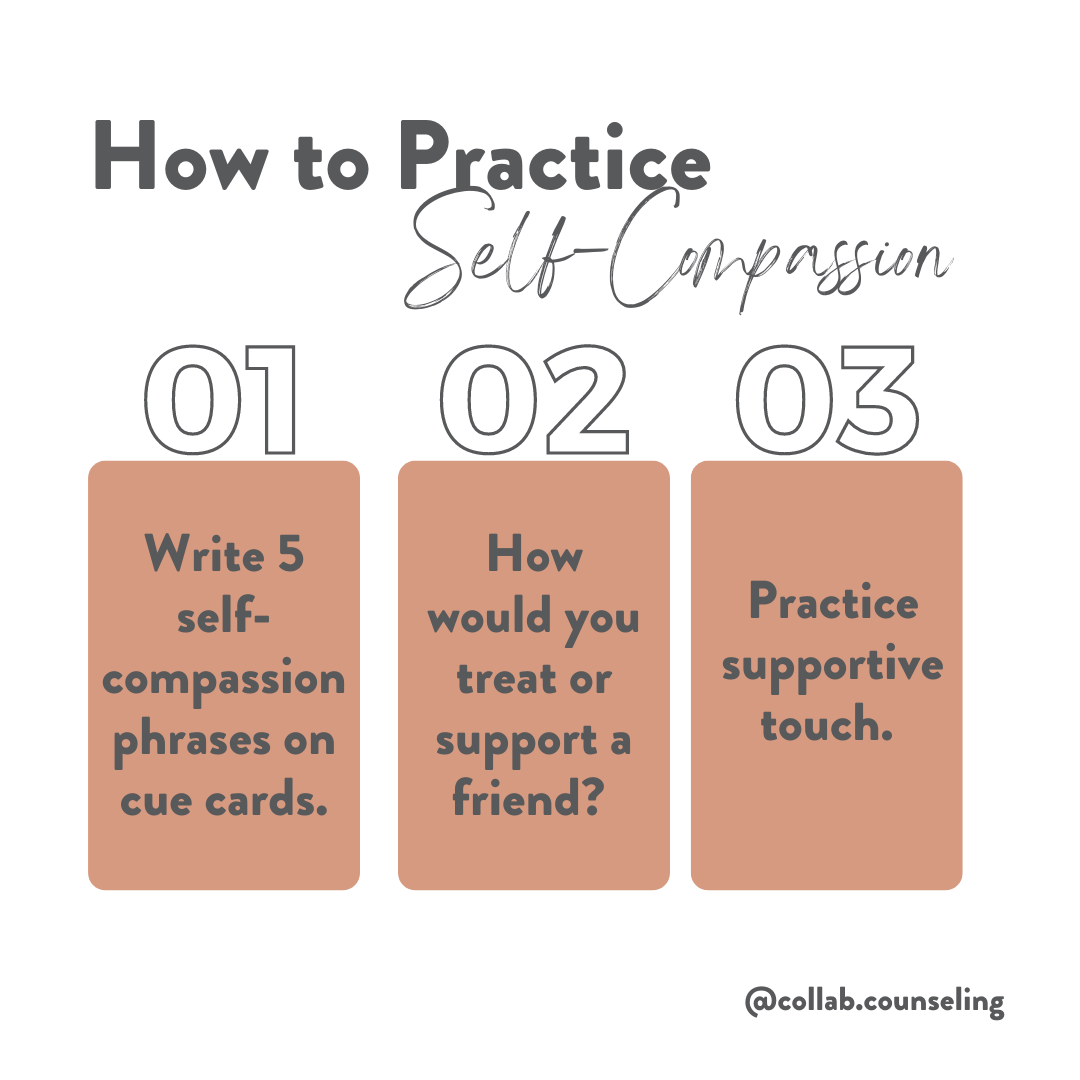
- Self-Compassion: Respond with kindness. You can ask yourself, “What do I need right now?” or “What would I say to a friend in this situation?” Then, offer yourself some compassion, such as:
- Self-Kindness: Put your hand over your heart or another place where you feel the emotion and say, “May I be kind to myself.”
- Common Humanity: Remind yourself that you are not alone in your experience. Say to yourself, “Everyone struggles.”
- Mindfulness: Focus on your breath, noticing the sensation of the air entering and leaving your body.
Example: Imagine you are feeling overwhelmed at work after a long day. You notice your shoulders are tense, and your mind is racing with thoughts of all the tasks you didn’t complete. Take a mindful self-compassion break:
- Pause and Notice: You stop working and become aware of your tense shoulders and racing thoughts.
- Acknowledge: You silently acknowledge, “This is a stressful moment.”
- Self-Compassion: You place your hand over your heart and say, “May I be kind to myself. Everyone feels overwhelmed sometimes. I will take a few deep breaths and then break the tasks into more manageable chunks.”
Integrating Self-Compassion into Daily Life
Integrating self-compassion into your daily life is crucial for cultivating a sustained sense of well-being and resilience. It’s not enough to practice meditation; the real work happens when you bring these principles into your everyday experiences. This section provides practical strategies and techniques to help you navigate challenges and cultivate self-compassion consistently.
Practicing Self-Compassion During Stressful Situations
Stressful situations are inevitable. Learning to respond to them with self-compassion can significantly reduce their impact and foster a sense of inner peace. This involves recognizing your suffering, acknowledging your common humanity, and offering yourself kindness.Here’s how to practice self-compassion during stressful situations:
- Recognize Your Suffering: The first step is to acknowledge that you are experiencing stress or suffering. This might involve noticing physical sensations like a racing heart or tense muscles, or emotional responses such as frustration or sadness. Avoid suppressing or ignoring these feelings. For instance, if you are stuck in traffic and feeling annoyed, instead of dismissing your feelings, acknowledge, “This traffic is frustrating, and it’s understandable that I’m feeling this way.”
- Acknowledge Common Humanity: Remind yourself that everyone experiences stress and difficult situations. You are not alone in your suffering. This perspective can help to diminish feelings of isolation and inadequacy. Consider the phrase, “This is a moment of suffering. Suffering is a part of life.” This simple statement can be a powerful reminder of shared human experience.
- Offer Yourself Kindness: Treat yourself with the same kindness and understanding you would offer a friend who is struggling. This might involve speaking to yourself in a gentle and supportive tone, offering words of encouragement, or engaging in self-soothing behaviors. For example, if you made a mistake at work, you might say to yourself, “It’s okay, everyone makes mistakes. I’ll learn from this and move forward.”
- Use Self-Compassion Breaks: When you notice yourself experiencing stress, take a few moments to practice a brief self-compassion break. This could involve taking a few deep breaths, placing your hand over your heart, and repeating a compassionate phrase such as, “May I be kind to myself in this moment. May I give myself the compassion I need.”
- Practice Mindful Observation: Instead of getting swept away by the stress, try to observe your thoughts and feelings without judgment. This can involve acknowledging the thoughts as they arise and then gently redirecting your attention to your breath or a soothing mantra. For instance, if you’re feeling anxious about an upcoming presentation, notice the anxious thoughts without judgment, and then focus on your breath to calm your nervous system.
Identifying and Challenging Self-Critical Thoughts in Real-Time
Self-critical thoughts can sabotage your well-being and hinder your progress. Identifying and challenging these thoughts is a critical step in developing self-compassion. It involves recognizing negative self-talk, understanding its origins, and replacing it with more compassionate and realistic perspectives.Here’s how to identify and challenge self-critical thoughts:
- Recognize Negative Self-Talk: Pay attention to the inner critic and identify the negative thoughts you are having. Common examples include: “I’m not good enough,” “I always fail,” or “I’m a complete mess.” Journaling can be a helpful tool for tracking these thoughts.
- Identify the Underlying Beliefs: Often, self-critical thoughts stem from underlying beliefs about yourself and the world. Ask yourself: “What core belief is fueling this thought?” For example, if you think, “I’m not good enough,” the underlying belief might be, “I need to be perfect to be worthy.”
- Challenge the Thoughts: Question the validity of your self-critical thoughts. Ask yourself: “Is this thought based on facts or feelings?” “Would I say this to a friend?” “What evidence do I have to support this thought?” Challenge the thought by reframing it.
- Reframe the Thoughts: Replace the negative thoughts with more compassionate and realistic ones. For example, instead of thinking, “I’m a failure,” you might think, “I made a mistake, but it doesn’t define me. I can learn from this.”
- Use the “Self-Compassion Phrase” Method: When a self-critical thought arises, use a self-compassion phrase such as, “This is a difficult moment,” “Suffering is a part of life,” or “May I be kind to myself.”
Incorporating Self-Compassionate Practices into Daily Routines
Integrating self-compassion into your daily routines makes it a sustainable practice. This involves creating habits that support your well-being and help you respond to challenges with kindness and understanding. These practices can be incorporated easily into your existing schedule.Here are some methods for incorporating self-compassionate practices into daily routines:
- Start the Day with a Self-Compassion Ritual: Begin your day with a brief self-compassion practice. This might include a short meditation, a few minutes of journaling, or repeating a self-compassion affirmation. For example, before checking emails, take a few deep breaths and say, “May I approach this day with kindness and compassion.”
- Schedule Regular Breaks for Self-Care: Incorporate regular breaks throughout the day to engage in self-care activities. This could include taking a short walk, listening to calming music, or practicing mindful breathing. These breaks provide opportunities to recharge and practice self-compassion.
- Practice Mindful Eating: Pay attention to your eating habits. Eat your meals mindfully, savoring each bite and noticing the sensations of hunger and fullness. This can help you cultivate a healthier relationship with food and reduce stress.
- Cultivate Self-Compassionate Language: Be mindful of the language you use when speaking to yourself and others. Replace harsh self-criticism with kind and supportive words. For instance, if you make a mistake, say, “It’s okay, everyone makes mistakes,” instead of “I’m so stupid.”
- Engage in Activities You Enjoy: Make time for activities that bring you joy and pleasure. This could include hobbies, spending time in nature, or connecting with loved ones. Engaging in these activities can boost your mood and foster a sense of well-being.
- Practice Gratitude: Take time each day to acknowledge and appreciate the good things in your life. This can involve keeping a gratitude journal, expressing thanks to others, or simply noticing the positive aspects of your experiences.
- Set Boundaries: Establish healthy boundaries in your relationships and work life. This can involve saying “no” to requests that overwhelm you, prioritizing your needs, and protecting your time and energy.
- Seek Support: Don’t hesitate to seek support from friends, family, or a therapist when you’re struggling. Talking about your challenges and receiving support can help you feel less alone and more resilient.
Common Challenges and Solutions in Self-Compassion Meditation
Practicing self-compassion meditation, while deeply beneficial, can present various challenges. These obstacles are normal and often arise due to ingrained patterns of self-criticism, negative self-talk, and emotional resistance. Understanding these challenges and having strategies to navigate them is crucial for a successful and fulfilling practice.
Resistance to Self-Compassion
Individuals may experience resistance when confronted with the idea of self-compassion. This resistance can manifest in several ways, often stemming from deeply held beliefs about self-worth or a fear of vulnerability.
- Self-Criticism and Doubt: Many individuals are accustomed to self-criticism and may find it difficult to believe they deserve compassion. This can lead to thoughts such as, “I don’t deserve to be kind to myself,” or “I need to be tougher on myself to improve.”
- Fear of Weakness: Some people may perceive self-compassion as a sign of weakness or laziness. They may worry that being kind to themselves will lead to complacency and a lack of motivation.
- Discomfort with Vulnerability: Opening oneself up to feelings of compassion can be emotionally challenging. This can be particularly true for individuals who have experienced trauma or who have learned to suppress their emotions.
To overcome resistance:
- Start Small: Begin with short meditation sessions (5-10 minutes) and gradually increase the duration as you become more comfortable.
- Acknowledge and Validate: Recognize that resistance is a natural response. Acknowledge your feelings without judgment, such as “It’s understandable that I feel resistant.”
- Reframe Negative Thoughts: Challenge self-critical thoughts by questioning their validity. Ask yourself if you would speak to a friend the same way you are speaking to yourself.
- Focus on the Intention: Remind yourself of the benefits of self-compassion, such as increased resilience, improved well-being, and stronger relationships.
- Use Guided Meditations: Guided meditations can provide structure and support, especially for beginners. The voice of a guide can offer comfort and encouragement.
- Practice Loving-Kindness: Begin by extending compassion to others. This can make it easier to then direct compassion toward yourself.
Handling Intrusive Thoughts and Distractions
Intrusive thoughts and distractions are a common experience during meditation, especially when cultivating self-compassion. These thoughts can range from everyday worries to intense emotional memories. Learning how to manage these distractions is essential for maintaining focus and deriving benefit from the practice.
- Understanding the Nature of Thoughts: Thoughts are fleeting and impermanent. They are not facts, and they do not define you.
- Recognizing the Distraction: When a thought arises, simply acknowledge it without judgment. Avoid getting caught up in the content of the thought.
- Gentle Return to the Focus: Gently redirect your attention back to your chosen focus, such as your breath, a compassion mantra, or a body scan. Avoid judging yourself for being distracted.
- Acceptance and Non-Judgment: Accept that intrusive thoughts will arise. Practice non-judgment of yourself and the thoughts themselves.
- Use Anchors: Utilize anchors, such as the breath, the feeling of your body, or a chosen mantra, to return to the present moment.
- Practice Regularly: Consistent practice helps to build the mental resilience needed to handle distractions more effectively. The more you meditate, the easier it will become to stay focused.
The process of dealing with intrusive thoughts is similar to that of observing a stream of water. The water flows continuously, and thoughts are similar; they appear, pass, and fade away. The meditator is the observer, not the water itself. The key is to recognize the thoughts without getting carried away by them.
Measuring Progress and Maintaining Practice

Cultivating self-compassion is a journey, and like any journey, it’s helpful to have a map and a way to track your progress. Regular practice, coupled with mindful self-assessment, allows you to observe changes in your thoughts, feelings, and behaviors, reinforcing your commitment and sustaining your practice.
Tracking Progress in Cultivating Self-Compassion
To effectively gauge your progress, consider employing a multi-faceted approach that combines self-reflection, journaling, and behavioral observation. Regularly reviewing your practices allows you to identify areas of growth and areas where you might need to focus more attention.
- Journaling: Keeping a journal is a powerful tool for tracking changes in self-compassion.
- Document your thoughts and feelings before and after meditation sessions.
- Record instances where you responded to difficult situations with self-compassion, noting the specific actions or words you used.
- Reflect on challenges and setbacks, identifying what triggered them and how you could have approached them with more self-compassion.
- Self-Assessment Questionnaires: Periodically use self-assessment questionnaires designed to measure self-compassion levels. The Self-Compassion Scale (SCS), developed by Kristin Neff, is a widely used and validated tool.
- Administer the SCS at the beginning of your practice and then again after several weeks or months.
- Compare your scores to identify any shifts in your self-compassion levels.
- Analyze specific subscales (e.g., self-kindness, common humanity) to pinpoint areas where you have made the most progress.
- Behavioral Observation: Pay attention to how you respond to challenging situations in your daily life.
- Observe whether you are more forgiving of yourself when you make mistakes.
- Notice if you are less critical of your perceived shortcomings.
- Track instances where you offer yourself words of comfort and encouragement, just as you would a friend.
- Regular Review: Schedule regular times (e.g., weekly or monthly) to review your journal entries, questionnaire results, and behavioral observations.
- Seek Feedback: Consider sharing your journey with a trusted friend, therapist, or meditation teacher, who can offer insights and support.
Establishing a Consistent Meditation Schedule
Consistency is key to reaping the benefits of self-compassion meditation. Establishing a regular schedule, even if it’s just for a few minutes each day, helps to create a habit and integrate the practice into your daily life.
- Start Small: Begin with short meditation sessions (5-10 minutes) and gradually increase the duration as you become more comfortable.
- Choose a Time: Identify the best time of day for your practice, considering your energy levels and daily schedule. Morning, before work or school, or evening, before bed, are popular choices.
- Set Reminders: Use reminders on your phone, computer, or calendar to prompt you to meditate.
- Create a Dedicated Space: Designate a quiet and comfortable space where you can meditate without distractions.
- Integrate Meditation into Your Routine: Link your meditation practice to an existing habit, such as brushing your teeth or drinking your morning coffee. This can make it easier to remember and stick to your schedule.
- Be Flexible: If you miss a session, don’t be discouraged. Simply resume your practice as soon as possible.
- Make it a Priority: Treat your meditation practice as an important appointment with yourself.
Meditation Apps and Resources for Ongoing Support
Numerous apps and online resources can provide guidance, support, and motivation for your self-compassion meditation practice. These resources offer guided meditations, educational content, and community support.
| App/Resource | Key Features | Benefits | Example Content |
|---|---|---|---|
| Insight Timer | Guided meditations, music, talks, courses, community features. | Wide variety of content, free options, social support. | Guided meditations on self-compassion by various teachers, talks on related topics. |
| Headspace | Guided meditations, courses, sleep sounds, animations. | User-friendly interface, structured courses, research-backed content. | Self-compassion courses, single meditations for specific situations (e.g., stress, anxiety). |
| Smiling Mind | Guided meditations, programs for adults and children. | Free access, programs for different age groups and needs. | Programs specifically designed to cultivate self-compassion, mindfulness exercises. |
| Self-Compassion.org | Website, resources, articles, research, self-compassion scale. | Informative content, access to the Self-Compassion Scale, research-based insights. | Articles, exercises, and resources on self-compassion, research findings, and self-assessment tools. |
Visualization Techniques for Self-Compassion
Visualization is a powerful tool for cultivating self-compassion. It allows us to create vivid mental images that can evoke feelings of warmth, kindness, and understanding towards ourselves and others. By engaging in these exercises regularly, we can train our minds to respond to difficult emotions with compassion rather than self-criticism. This section will explore specific visualization techniques designed to foster self-compassion.
Connecting with a Compassionate Figure
Connecting with a compassionate figure involves visualizing a person, real or imagined, who embodies compassion and unconditional love. This figure can serve as a source of support and guidance during times of emotional distress.To begin this exercise:
- Find a comfortable and quiet place where you can relax without distractions.
- Close your eyes gently and take a few deep breaths to center yourself.
- Imagine a person who represents compassion to you. This could be a loved one, a spiritual figure, a historical person, or even an idealized version of yourself. It is important that this person is someone who evokes feelings of warmth, safety, and unconditional acceptance.
- Visualize this figure clearly. Notice their appearance, their facial expressions, and the way they hold themselves.
- Imagine this figure is looking at you with kindness and understanding. Feel their presence and the compassion they radiate.
- Allow yourself to receive their compassion. Notice how it feels in your body. Does your heart feel lighter? Do you feel a sense of peace?
- Imagine this figure offering you words of comfort and support. What would they say to you in a moment of difficulty? Listen to their words and let them sink in.
- Stay with this visualization for several minutes, allowing yourself to fully experience the feeling of compassion.
- When you are ready, gently bring your awareness back to the present moment. Take a few more deep breaths and open your eyes.
Sending Compassion to Oneself and Others
This technique involves visualizing yourself and others and directing feelings of compassion towards them. This can be particularly helpful when experiencing difficult emotions or when witnessing the suffering of others.To practice sending compassion to yourself:
- Begin by finding a comfortable posture and closing your eyes.
- Bring to mind a situation where you are experiencing difficulty or self-criticism.
- Visualize yourself in that situation. See yourself as if you are watching a movie of yourself.
- Acknowledge the difficulty and suffering you are experiencing. Recognize that this is a moment of pain.
- Imagine yourself surrounded by a warm, golden light, symbolizing compassion.
- Silently repeat phrases of self-compassion, such as:
“May I be kind to myself.”
“May I accept myself as I am.”
“May I be free from suffering.” - Feel the warmth and kindness of the compassion radiating towards you.
- Allow the compassion to soothe and comfort you.
- Continue the visualization for several minutes.
- Gently bring your awareness back to the present moment.
To practice sending compassion to others:
- Find a comfortable position and close your eyes.
- Bring to mind a person you are struggling with, or someone who is suffering.
- Visualize this person. See them clearly.
- Acknowledge their suffering and recognize that they, too, are experiencing pain.
- Imagine sending them the same warm, golden light of compassion.
- Silently repeat phrases of compassion directed towards them, such as:
“May you be free from suffering.”
“May you find peace.”
“May you be kind to yourself.” - Feel the intention of compassion radiating towards them.
- Allow the compassion to create a sense of connection and understanding.
- Continue the visualization for several minutes.
- Gently bring your awareness back to the present moment.
Guided Visualization for Self-Forgiveness
This guided visualization exercise is designed to help you cultivate self-forgiveness. It involves acknowledging mistakes, recognizing your inherent worth, and releasing self-blame.The script for the guided visualization:
- Find a quiet and comfortable space where you won’t be disturbed.
- Close your eyes gently and take a few deep, calming breaths. Feel your body relax with each exhale.
- Imagine yourself in a peaceful setting, perhaps a quiet meadow, a serene beach, or any place that brings you a sense of calm.
- Now, bring to mind a situation where you feel you made a mistake or acted in a way you regret. Don’t judge yourself. Simply observe the situation as it unfolds in your mind’s eye.
- Acknowledge the situation and the emotions that arise. Recognize the feelings of guilt, shame, or regret. It’s okay to feel these emotions. They are a natural part of being human.
- Now, imagine a wise and compassionate figure appearing before you. This could be a loved one, a spiritual guide, or an idealized version of yourself. See their face, their expression, and the way they hold themselves. This figure represents your capacity for self-compassion.
- This figure looks at you with understanding and kindness. They see your mistake, but they also see your inherent goodness and worth. They recognize that you are human and that mistakes are part of the learning process.
- Imagine this figure gently placing a hand on your shoulder or offering you a comforting embrace. Feel their warmth and support.
- Hear the figure say words of forgiveness to you. These words might be: “It’s okay. You are worthy of love and compassion. Everyone makes mistakes. You are learning and growing.”
- Let these words sink in. Allow yourself to fully receive the forgiveness. Feel the weight of self-blame begin to lift.
- Now, imagine a golden light surrounding you, representing unconditional love and acceptance. This light is washing away the residue of the mistake. Feel yourself being cleansed and renewed.
- Visualize yourself releasing the mistake. Imagine it floating away like a leaf on a stream or dissolving into the light. Let it go.
- Take a few deep breaths and feel a sense of lightness and freedom.
- Tell yourself: “I forgive myself. I am worthy of compassion. I am learning and growing.”
- When you are ready, slowly bring your awareness back to the present moment. Take a few more deep breaths and gently open your eyes.
Dealing with Difficult Emotions During Meditation
During meditation, it’s common to encounter a range of emotions, some pleasant, and others less so. It’s essential to approach these difficult emotions with understanding and acceptance, recognizing them as natural parts of the human experience. The goal isn’t to eliminate these feelings but to develop a healthy relationship with them, allowing them to arise and pass without getting swept away by them.
Approaching Difficult Emotions
When challenging emotions arise during meditation, it’s helpful to remember that you are not your emotions. They are temporary experiences, like clouds passing through the sky. Here’s how to approach them:
- Observe Without Judgment: Simply notice the emotion without labeling it as “good” or “bad.” Acknowledge its presence without getting caught up in the story it tells.
- Allow and Accept: Resist the urge to push the emotion away or suppress it. Allow yourself to feel it fully, accepting it as a valid part of your experience.
- Name the Emotion: Silently naming the emotion can help create distance from it. For example, you might think, “This is sadness,” or “This is anger.”
- Focus on the Body: Notice where the emotion is felt in your body. Does your chest feel tight? Is your stomach churning? Paying attention to the physical sensations can help ground you in the present moment.
- Breathe Through It: Use your breath as an anchor. Inhale deeply, allowing the breath to soften and soothe the emotional experience. Exhale slowly, releasing tension.
Managing Feelings of Sadness, Anger, or Shame
Different emotions may require slightly different approaches. Here are some techniques for managing sadness, anger, and shame:
- Sadness: Allow yourself to feel the sadness without judgment. Remind yourself that sadness is a natural response to loss or disappointment. Consider offering yourself words of comfort and compassion, as you would a dear friend.
- Anger: Acknowledge the anger without acting on it. Notice the physical sensations of anger in your body. Try to identify the underlying unmet needs or hurts that are fueling the anger. Consider practicing loving-kindness meditation, directing compassion towards yourself and others, including those you feel angry with.
- Shame: Recognize that shame is a common human experience. Remind yourself that you are worthy of love and belonging, even when you make mistakes. Practice self-compassion by speaking to yourself with kindness and understanding. Challenge the negative self-talk that often accompanies shame.
Releasing Negative Emotions
A powerful technique for gently releasing negative emotions involves a combination of awareness, acceptance, and letting go. This process can be applied to various emotions, such as fear, anxiety, or grief.
Step 1: Acknowledge the Emotion: Bring your attention to the emotion you’re experiencing. Name it. For example, “I am feeling fear.”
Step 2: Allow the Sensation: Allow yourself to fully experience the physical sensations associated with the emotion. Where do you feel it in your body? What does it feel like?
Step 3: Offer Compassion: Speak to yourself with kindness and understanding. Imagine a compassionate presence, such as a loving friend or a wise mentor, offering you support.
Step 4: Visualize Letting Go: Visualize the emotion as a physical object, such as a dark cloud or a heavy weight. Imagine gently releasing it. You might visualize it dissolving, floating away, or transforming into something lighter.
Step 5: Return to the Present: Once you feel a sense of release, gently return your attention to your breath or another focal point. Notice the shift in your body and mind.
Adapting Meditation for Different Needs
Meditation is a versatile practice, but it’s not a one-size-fits-all solution. Individual needs and circumstances can significantly impact how meditation is approached and practiced. Adapting meditation techniques ensures accessibility and maximizes the benefits for everyone, regardless of their physical or mental health status. This section provides guidance on tailoring meditation to specific needs, including physical limitations, anxiety, and depression, alongside a curated list of resources and adaptations for different populations.
Adapting Meditation for Physical Limitations
Physical limitations should not be a barrier to experiencing the benefits of meditation. Numerous modifications can be made to accommodate various physical challenges, allowing individuals to find comfortable and effective ways to practice.
- Seated Posture Adjustments: The traditional cross-legged position may be difficult for some. Instead, consider:
- Sitting in a chair with a straight back, ensuring feet are flat on the floor.
- Using cushions or a meditation bench to elevate the hips and support the spine.
- Lying down on a bed or mat, supported by pillows for comfort.
- Movement-Based Meditation: Incorporating gentle movements can be beneficial for those with limited mobility:
- Walking meditation, focusing on the sensations of each step.
- Tai Chi or Qigong, which combine movement, breathwork, and meditation.
- Yoga, adapted to individual physical capabilities, emphasizing mindful stretching and poses.
- Duration and Frequency: Adjust the length and frequency of meditation sessions to fit physical capabilities and energy levels. Start with shorter sessions and gradually increase the duration as comfort allows.
- Assistive Devices: Utilize supportive aids such as back braces, neck pillows, or weighted blankets to improve comfort and stability during meditation.
Adapting Meditation for Anxiety or Depression
Meditation can be a powerful tool for managing anxiety and depression, but it’s essential to approach the practice thoughtfully. Specific adaptations can help individuals with these conditions to navigate meditation safely and effectively.
- Guided Meditations: Guided meditations are often helpful, especially for beginners or those struggling with racing thoughts. They provide a structured framework and can help to focus the mind.
- Mindfulness of Breathing: This technique involves focusing on the breath, which can help to ground the practitioner in the present moment. It is often a good starting point for those experiencing anxiety.
- Loving-Kindness Meditation: Cultivating feelings of compassion and kindness towards oneself and others can be very beneficial for managing depression. This practice helps to counter negative self-talk and promote positive emotions.
- Body Scan Meditation: This technique involves systematically bringing awareness to different parts of the body, which can help to reduce physical tension and promote relaxation.
- Avoidance of Triggering Content: Be mindful of the content of meditations, especially when using guided practices. Avoid themes or visualizations that might be triggering or increase anxiety.
- Professional Guidance: Seek the support of a therapist or counselor, especially if experiencing severe anxiety or depression. They can provide personalized guidance and support.
- Start Slowly: Begin with short meditation sessions (e.g., 5-10 minutes) and gradually increase the duration as tolerance and comfort levels increase.
Resources and Adaptations for Specific Populations
Different populations may benefit from specific adaptations and resources to support their meditation practice. The following list highlights some key considerations.
- Children: Meditation can be adapted for children by using age-appropriate language, shorter sessions, and playful techniques. Examples include:
- Mindful Games: Activities such as “belly breathing” or “body scan” games.
- Visualizations: Guiding children through visualizations of calm places or positive scenarios.
- Seniors: Meditation can be adapted for seniors by considering physical limitations and age-related cognitive changes. Adaptations include:
- Chair-Based Meditation: Practicing meditation while seated in a comfortable chair.
- Shorter Sessions: Focusing on shorter meditation sessions to maintain focus and reduce fatigue.
- Memory Aids: Using guided meditations or recordings to help with focus and recall.
- Individuals with Trauma: Meditation can be a valuable tool for healing from trauma, but it’s crucial to approach the practice with caution and sensitivity. Considerations include:
- Trauma-Informed Practices: Seeking out meditation teachers with experience in trauma-informed practices.
- Grounding Techniques: Utilizing techniques to help individuals stay grounded in the present moment.
- Self-Compassion: Focusing on self-compassion to promote healing and self-acceptance.
- Individuals with ADHD: Meditation can help individuals with ADHD improve focus and reduce impulsivity. Adaptations include:
- Short, Frequent Sessions: Practicing meditation in short, frequent bursts throughout the day.
- Movement Breaks: Incorporating movement breaks into meditation sessions.
- Focus on the Breath: Focusing on the breath to anchor attention and reduce mind-wandering.
- Resources:
- Apps and Websites: Numerous apps and websites offer guided meditations, tailored to different needs and populations (e.g., Calm, Headspace, Insight Timer).
- Books and Articles: Many books and articles provide guidance on adapting meditation for specific populations and conditions.
- Meditation Teachers: Seek guidance from experienced meditation teachers who specialize in working with specific populations.
The Role of Self-Compassion in Relationships
Self-compassion is not just a personal practice; it profoundly impacts our relationships with others. Cultivating self-compassion allows us to approach interactions with greater understanding, empathy, and resilience, leading to more fulfilling and harmonious connections. It provides a foundation for healthier communication, conflict resolution, and overall relationship satisfaction.
Improving Relationships Through Self-Compassion
Self-compassion fosters healthier relationships by shifting our focus from self-criticism to self-kindness. This internal shift influences how we perceive and interact with others. When we are compassionate towards ourselves, we are less likely to project our insecurities and judgments onto our partners, friends, or family members.
- Reduced Reactivity: Self-compassion helps us regulate our emotions. Instead of reacting defensively or with anger, we can respond to difficult situations with greater calm and clarity. For example, if a friend cancels plans, someone with high self-compassion might acknowledge their disappointment but also understand that their friend might have a valid reason. They are less likely to jump to conclusions or become accusatory.
- Enhanced Emotional Availability: Being kind to oneself allows us to be more present and emotionally available for others. We are better equipped to listen, understand, and offer support without feeling drained or overwhelmed. This creates a safe space for vulnerability and intimacy.
- Increased Empathy: Self-compassion cultivates empathy. When we recognize our own suffering and imperfections, we are better able to understand and connect with the suffering of others. This leads to deeper compassion and understanding in our interactions.
- Improved Communication: Self-compassion encourages honest and open communication. We are more likely to express our needs and feelings clearly and respectfully, and less likely to resort to blaming or criticizing others. For instance, in a disagreement with a partner, a self-compassionate person might say, “I feel hurt when that happens, and I’m struggling to manage my feelings, can we talk about it?” instead of “You always do this to me!”
- Greater Forgiveness: Self-compassion makes it easier to forgive both ourselves and others. When we understand that everyone makes mistakes and experiences challenges, we are less likely to hold grudges or dwell on past hurts. This fosters a more forgiving and supportive environment in our relationships.
Responding to Conflict with Self-Compassion
Conflict is inevitable in any relationship. However, how we navigate these conflicts significantly impacts their outcome. Self-compassion provides tools for responding to conflict in a constructive and healthy manner.
- Recognizing Common Humanity: During a conflict, remembering the shared human experience can be incredibly helpful. Acknowledging that both parties are likely experiencing some form of suffering, whether it’s fear, frustration, or disappointment, can shift the dynamic from “us versus them” to “we are both struggling.”
- Mindful Awareness of Emotions: Practicing self-compassion involves paying attention to our emotions without judgment. During a conflict, this means noticing our feelings of anger, fear, or sadness without getting swept away by them. This allows us to respond rather than react.
- Self-Soothing Techniques: Employing self-soothing techniques can help calm the nervous system during conflict. This might involve taking deep breaths, practicing a brief body scan, or repeating a compassionate mantra. For example, one might say, “This is a difficult moment, and I’m here for myself.”
- Taking Responsibility: Self-compassion encourages taking responsibility for our actions and words. Instead of blaming the other person, we can acknowledge our part in the conflict and apologize if necessary.
- Setting Boundaries: While self-compassion promotes understanding, it also encourages setting healthy boundaries. This means clearly communicating our needs and limitations, and not allowing ourselves to be mistreated.
Enhancing Empathy and Understanding in Interpersonal Interactions
Empathy and understanding are essential for building strong and meaningful relationships. Self-compassion acts as a catalyst for cultivating these qualities, allowing us to connect with others on a deeper level.
- Increased Perspective-Taking: Self-compassion helps us step outside our own perspective and see things from the other person’s point of view. When we are kind to ourselves, we are more open to understanding the experiences and perspectives of others, even when we disagree with them.
- Active Listening: Empathetic listening is crucial for understanding others. Self-compassion enables us to listen actively, without judgment, and with a genuine desire to understand the other person’s feelings and experiences.
- Validation of Feelings: Self-compassion encourages us to validate the feelings of others, even if we don’t fully understand them. This creates a sense of safety and connection, allowing the other person to feel heard and understood. For example, instead of dismissing a friend’s feelings, one might say, “That sounds really difficult, and it makes sense that you’re feeling that way.”
- Non-Judgmental Acceptance: Self-compassion fosters non-judgmental acceptance of others. We learn to accept people for who they are, flaws and all, without trying to change them. This creates a more accepting and supportive environment.
- Building Trust and Intimacy: By practicing empathy and understanding, we build trust and intimacy in our relationships. This allows us to connect with others on a deeper level, creating more fulfilling and meaningful relationships.
Conclusive Thoughts
In conclusion, “How to Meditate for Improving Self-Compassion” illuminates the path to cultivating inner peace and resilience. By integrating mindfulness and compassion-focused techniques, readers can navigate life’s challenges with greater ease and self-acceptance. This guide equips you with the tools and knowledge to not only deepen your meditation practice but also to foster a more compassionate and understanding relationship with yourself and, consequently, with the world around you.
Embrace this journey and unlock the transformative power of self-compassion through the art of meditation.